
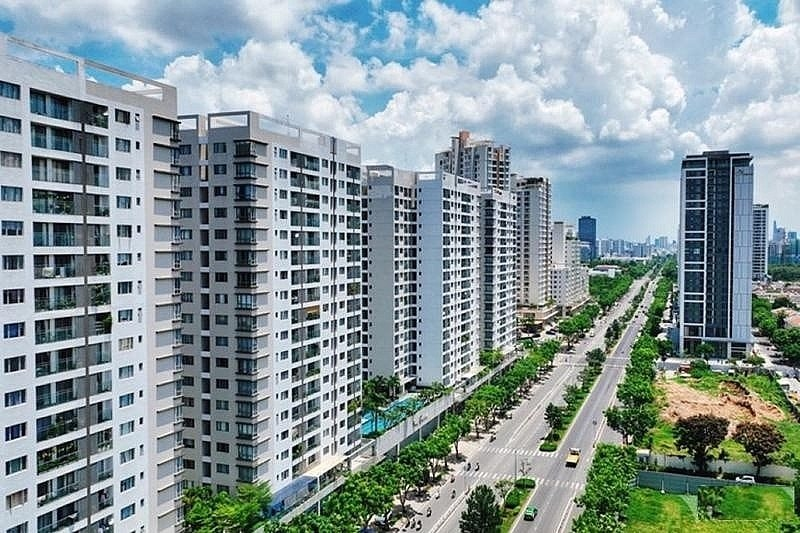
Amid sharp increases in property prices and growing speculative activities, Prime Minister Pham Minh Chinh has instructed the Ministry of Finance to conduct a thorough review of tax policies to curb real estate speculation and redirect investment capital toward productive and business activities.
The directive was delivered at the fifth meeting of the Central Steering Committee on Housing Policy and the Real Estate Market on January 13. According to the Prime Minister, housing is an essential need, and housing policies must ensure equal access for citizens, place people at the center, and leave no one behind.
The Prime Minister emphasized the need to bring down commercial housing prices—particularly apartment prices—to reasonable levels in line with income levels and the country’s overall economic development. This goal has been identified as a key priority in the management of the real estate market in the coming period.
Data from the Ministry of Construction shows that apartment prices rose by 20–30% last year, with some areas recording increases of over 40%, mainly in the mid-range and high-end segments. Prices of townhouses in projects increased by 10–20%, while land plot prices climbed by 20–25%, highlighting mounting pressure on housing affordability.
In response, the Prime Minister assigned the Ministry of Finance to study appropriate tax instruments to limit speculative behavior. Previously, various real estate tax proposals were introduced, including taxing the gap between land-use fee calculations and actual selling prices. However, these proposals have not been implemented. Under the amended Personal Income Tax Law passed by the National Assembly in late 2025, the existing 2% tax on real estate transfer values remains unchanged.
In parallel, the State Bank of Vietnam has been tasked with tightening control over real estate credit to prevent speculative capital from distorting the market. According to Vietcombank Securities (VCBS), outstanding loans for real estate business activities reached approximately VND 1.82 quadrillion by the end of Q3 2025, accounting for nearly 10% of total credit in the economy.
The Prime Minister also urged the Ministry of Construction to develop policies to promote housing for middle-income earners, while accelerating social housing development, particularly rental housing. Social housing projects will be placed in a “green lane” and prioritized in administrative procedures. To date, 17 provinces and cities have reported demand for more than 67,100 social rental housing units, though major cities such as Hanoi and Ho Chi Minh City have yet to submit official data.
As Vietnam’s real estate market enters a phase of tighter regulatory oversight, the need for strategic consulting, policy analysis, and investment advisory services is becoming increasingly critical. With expertise in investment consulting, policy research, real estate development, and FDI promotion, SD Link supports investors and enterprises in assessing risks, identifying opportunities, and formulating development strategies aligned with evolving market trends and regulatory frameworks.
Source: VnExpress