On the afternoon of March 11, 2026, the People’s Committee of Đắk Lắk Province held a meeting to review and provide comments on matters related to the adjustment of the Đắk Lắk Provincial Master Plan for the period 2021–2030, with a vision to 2050. The meeting was chaired by Tạ Anh Tuấn, Deputy Secretary of the Provincial Party Committee and Chairman of the Provincial People’s Committee, with the participation of provincial leaders and representatives from relevant departments, agencies, and organizations.
Also attending the meeting were Hồ Thị Nguyên Thảo, Member of the Provincial Party Standing Committee and Permanent Vice Chairwoman of the Provincial People’s Committee; Vice Chairmen of the Provincial People’s Committee Trương Công Thái; Vice Chairmen of the Provincial People’s Committee Đào Mỹ, along with leaders of various departments, agencies, and related units.
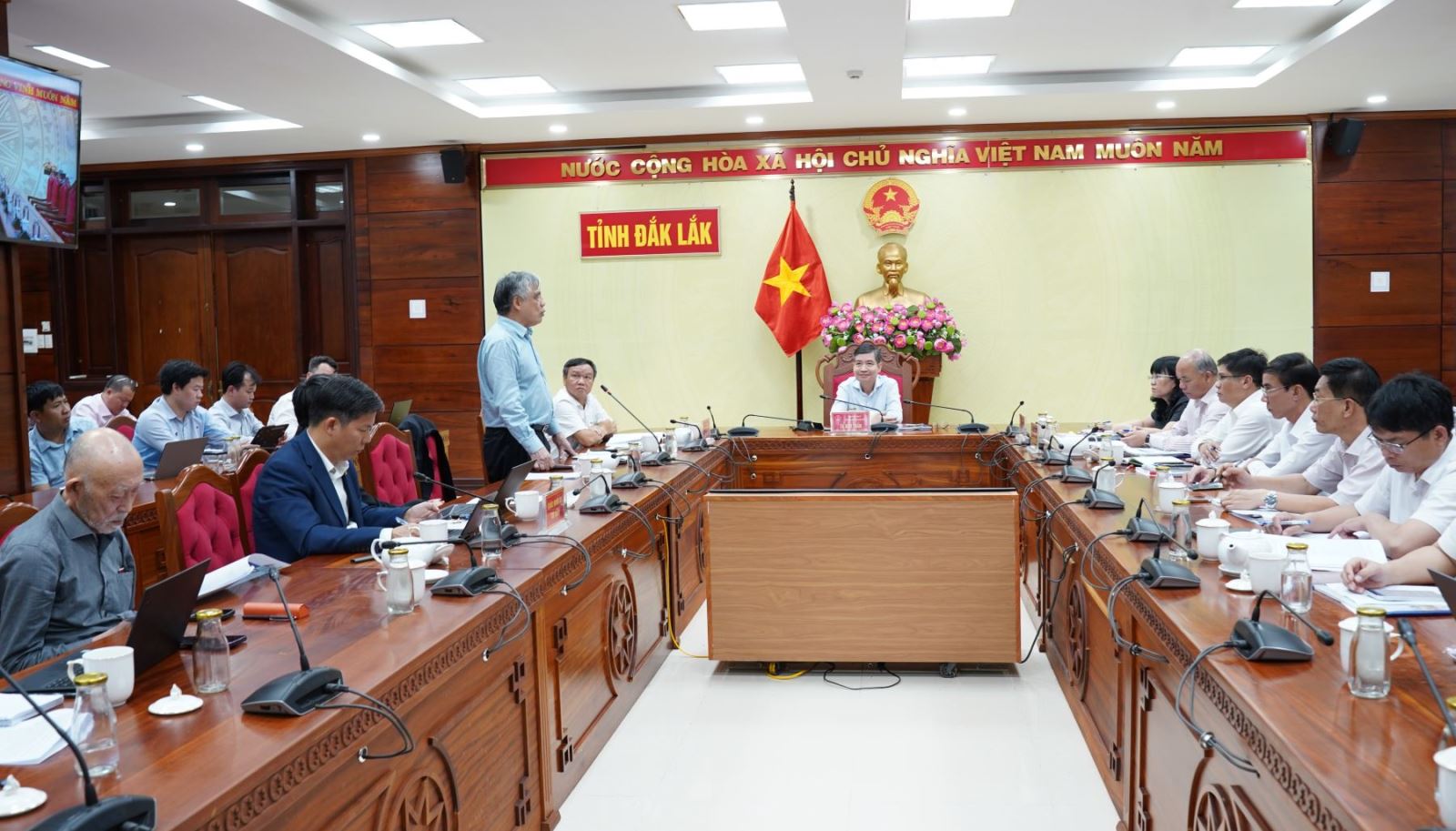
Delegates attending the meeting.
Adjusting the Master Plan in the Context of Administrative Merger
The adjustment of the provincial master plan is being carried out in the context of implementing Resolution No. 202/2025/QH15 dated June 12, 2025, issued by the National Assembly on the reorganization of provincial administrative units. Under this resolution, the former Đắk Lắk Province and Phú Yên Province were merged to form the new Đắk Lắk Province, with a population of more than 3.3 million people and a natural area exceeding 18,000 km².
The integration of the geographical space between the Central Highlands and the South Central Coast is considered to open up new opportunities for interregional socio-economic development, particularly in sectors such as logistics, tourism, agriculture, and energy.
Prior to the merger, each locality had its own development orientation under separate provincial master plans approved by the Prime Minister under Decision No. 1746/QĐ-TTg and Decision No. 1747/QĐ-TTg. Therefore, the adjustment of the Đắk Lắk Provincial Master Plan for the period 2021–2030, with a vision to 2050, is necessary to ensure a unified development orientation following the establishment of the new administrative unit.
Reorganizing the Socio-Economic Development Space
At the meeting, representatives of the consulting unit presented a summary report on the proposed adjustment of the provincial master plan. According to the report, the adjustment aims to concretize orientations from higher-level planning frameworks at the local level while reorganizing the socio-economic development space, national defense and security, and the urban–rural system in a coordinated manner.
The adjustment process is being carried out based on the inheritance of planning contents from the two former provinces, while also reviewing previously approved plans to optimize development resources. Through this process, the province aims to establish key socio-economic regions and develop a streamlined and modern spatial development structure that maximizes the integrated advantages of the newly merged province.
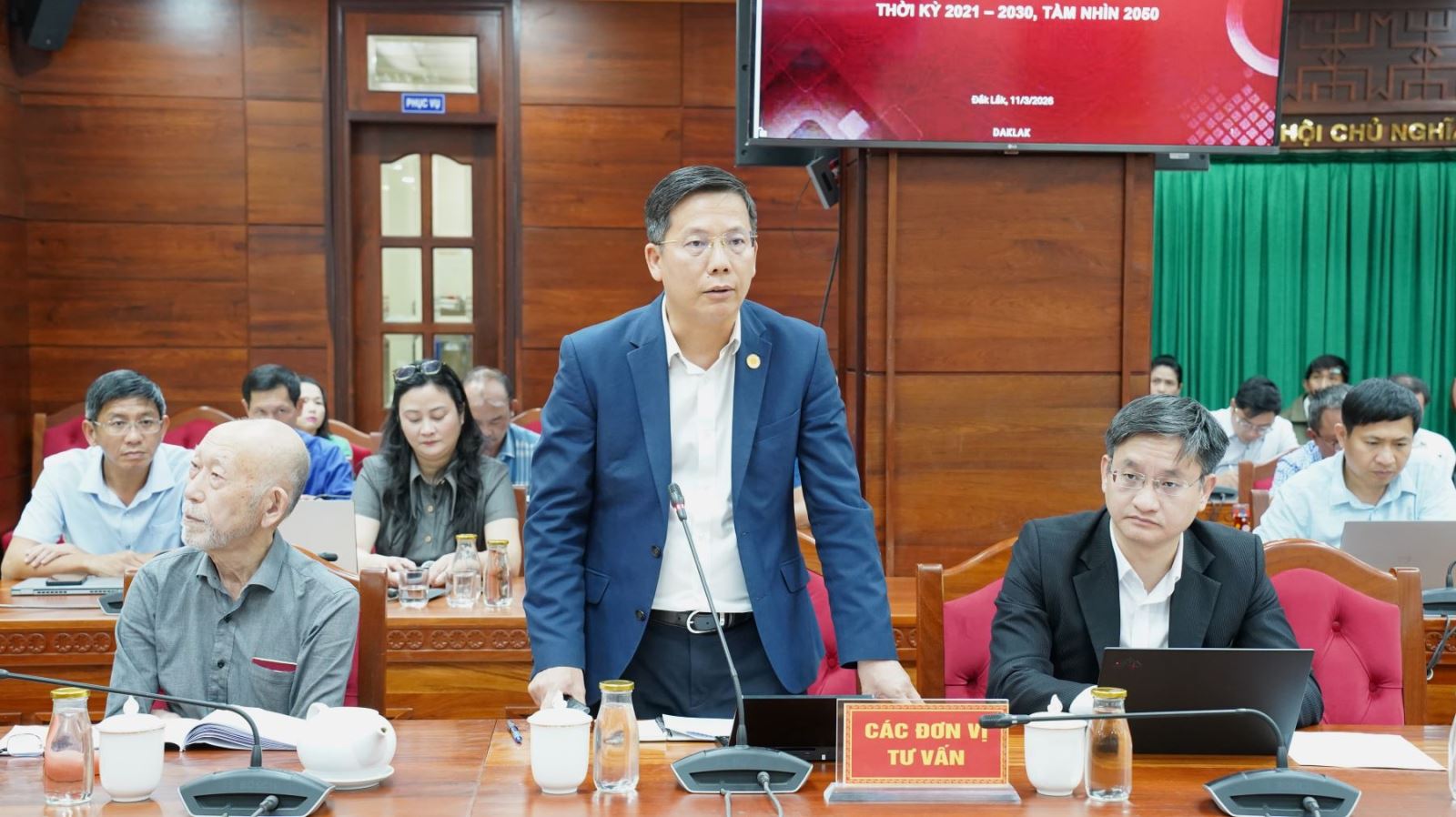
Dr. Nguyễn Đình Chúc, Director of the Vietnam Institute of Economics and World Economy, representing the consulting unit, presented the contents of the adjustment to the Đắk Lắk Provincial Planning.
Refining Growth Scenarios and Infrastructure Orientations
During the discussion session, participants focused on various issues related to completing the provincial master plan. Discussions primarily addressed the comprehensive review of the master plans of the former Đắk Lắk and Phú Yên provinces prior to the merger; the assessment of Đắk Lắk Province’s position and role within the region and nationwide; and the evaluation of the province’s socio-economic development status.
Participants also exchanged views on the province’s development vision and guiding perspectives for the coming period, including strategic objectives, growth scenarios, development pillars and breakthroughs, as well as orientations for spatial organization and infrastructure development.
According to the initial assessment, the summary report on the planning adjustment has identified the province’s development potential and advantages as a basis for building future growth scenarios. However, participants recommended further review and refinement of several aspects, including the province’s economic context, the planning of the urban system and infrastructure, and the clarification of specific characteristics and advantages of each region and locality in order to determine priority development objectives.
At the same time, socio-economic indicators and data related to growth, population, transport infrastructure, urban development, services, and tourism need to be updated and reviewed to ensure accuracy and feasibility. Participants also emphasized that economic development should be closely linked with environmental protection while preserving and promoting the cultural identities of ethnic communities in the province.
Creating a Foundation for Investment Attraction and Sustainable Development
Speaking at the meeting, Chairman of the Provincial People’s Committee Tạ Anh Tuấn emphasized that provincial planning is a task of great significance for shaping the locality’s long-term development orientation. Effective planning implementation will create a foundation for attracting investment, particularly in sectors such as energy, logistics, tourism, and high-tech agriculture.
Concluding the meeting, provincial leaders requested the Department of Finance and consulting units to fully incorporate the comments provided by participants and continue consulting with experts and relevant agencies in order to promptly finalize the dossier for adjusting the Đắk Lắk Provincial Master Plan for the period 2021–2030, with a vision to 2050, in accordance with prescribed procedures and regulations.
.jpg)
Tạ Anh Tuấn, Deputy Secretary of the Provincial Party Committee and Chairman of the Provincial People’s Committee, delivered remarks at the meeting.
As one of the four member units in the consulting consortium responsible for the adjustment of the Đắk Lắk Provincial Master Plan for 2021–2030, with a vision to 2050, SDLink collaborates with research institutions, experts, and other consulting units within the consortium to conduct research, compile information, analyze development conditions, and propose strategic development orientations for the province following the establishment of the new administrative unit.
Participation in the provincial planning adjustment process not only demonstrates SDLink’s professional expertise in strategic consulting and development planning, but also affirms the company’s role in supporting localities in researching and formulating long-term socio-economic development orientations that align with new development requirements and regional integration trends.
Compiled by: Thùy Đặng