On the afternoon of April 6, the Dak Lak Provincial People’s Committee convened a conference to review and provide feedback on the draft report for the second adjustment of the Provincial Master Plan, while discussing orientations to finalize the planning dossier for the 2021–2030 period with a vision to 2050. The conference was chaired by Mr. Do Huu Huy, Deputy Secretary of the Provincial Party Committee and Chairman of the Provincial People’s Committee, with the participation of Vice Chairpersons, leaders of departments, agencies, and units, and was connected online to localities across the province.
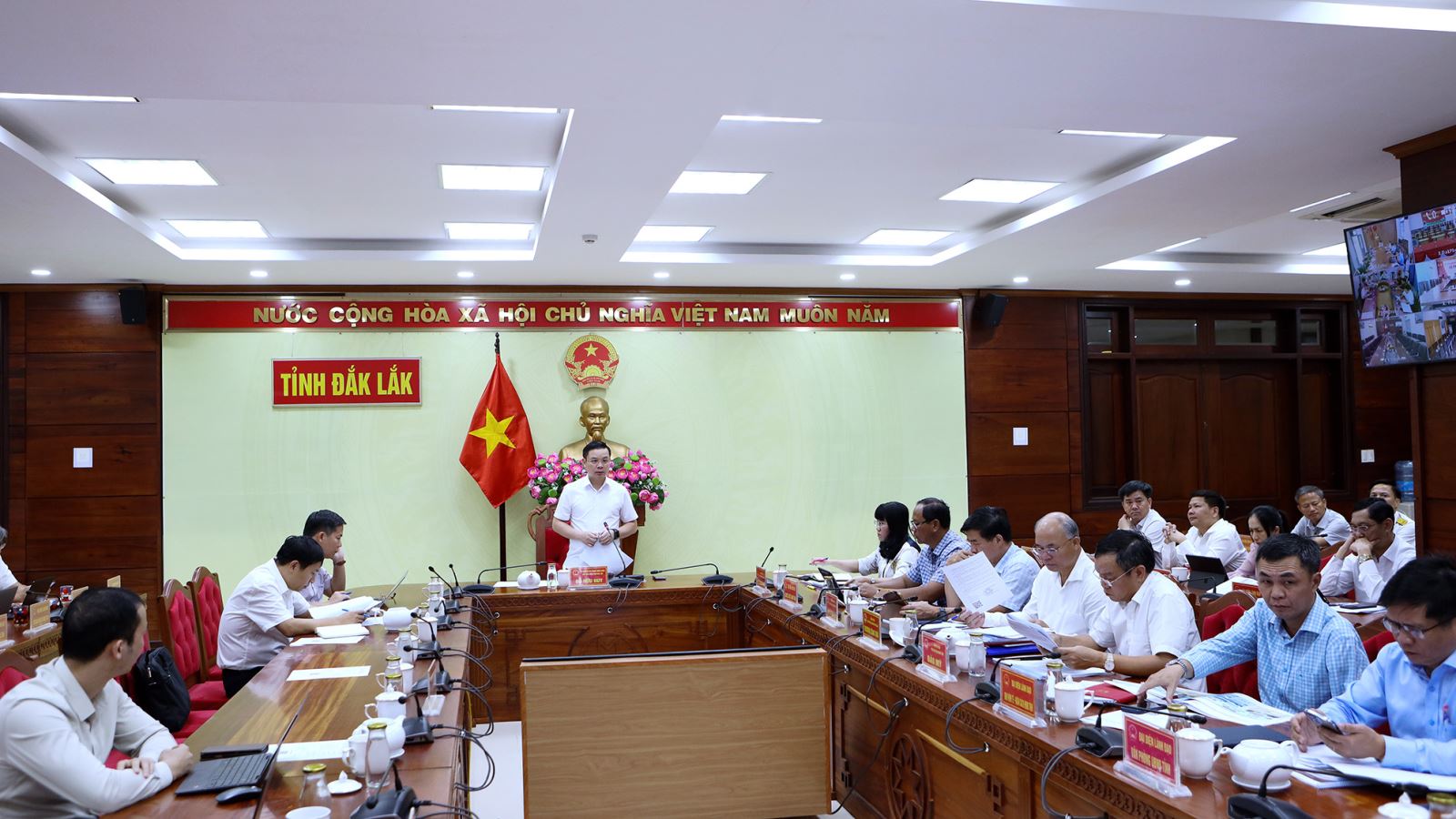
Mr. Do Huu Huy, Alternate Member of the Party Central Committee, Deputy Secretary of the Provincial Party Committee, and Chairman of the Provincial People’s Committee, chaired the conference at the Provincial People’s Committee venue.
The adjusted draft master plan is developed based on the inherited development orientations of the Dak Lak and Phu Yen provincial plans for the 2021–2030 period, while incorporating updates from the Provincial Party Congress Report. It ensures consistency with the spirit of the 14th National Party Congress, the 10-year Socio-Economic Development Strategy (2021–2030), the National Master Plan, as well as sectoral and regional plans for the South Central Coast and Central Highlands. The adjustment aims to enhance coherence, regional connectivity, and alignment with the country’s overall development direction in the new phase.
By 2030, Dak Lak aims to build a clean, strong, and efficient political system while promoting green economic growth driven by science, technology, innovation, and digital transformation. The province strives to become a green economic hub of the South Central Coast and Central Highlands, as well as an attractive destination for both domestic and international tourism. The development orientation emphasizes leveraging geographical advantages, natural resources, and cultural identity, alongside environmental protection, improved living standards, and strengthened national defense and security. By 2050, Dak Lak targets becoming a well-developed province with a modern, balanced, and sustainable green economy.
In terms of spatial development, the draft proposes a reorganization model consisting of five economic corridors, six growth poles, and six development zones, integrating the previous structures of Dak Lak and Phu Yen. The five economic corridors serve as the strategic backbone for regional connectivity: the Eastern North–South corridor linked to National Highway 1A and the North–South expressway and railway system, focusing on urban services, heavy industry, energy, seaports, and coastal tourism; the Western North–South corridor associated with the Ho Chi Minh Road (future CT02 expressway), promoting agro-forestry processing industries, logistics, and trade centered around Buon Ma Thuot – Buon Ho; the central East–West corridor linked to National Highway 29 and CT23 expressway, connecting coastal areas, the Central Highlands, and border gateways; the Southern East–West corridor connected to CT24 expressway, linking Buon Ma Thuot to Van Phong Port (Khanh Hoa), driving industrial, logistics, and tourism development; and the Western border corridor along National Highway 14C, prioritizing forest economy, ecological agriculture, and border trade while ensuring national defense and security. This spatial structure is expected to strengthen regional linkages, maximize development potential, and promote balanced, sustainable growth.
Key development targets for the 2026–2030 period include an average GRDP growth rate of over 11% per year, GRDP per capita reaching at least VND 156 million, the digital economy contributing around 30% of GRDP, total social investment exceeding VND 640 trillion, and state budget revenue growing by over 11% annually (excluding land revenue).
At the conference, delegates focused discussions on development zoning, the structure of economic corridors, and the feasibility of sectoral targets. In his concluding remarks, the Chairman of the Provincial People’s Committee emphasized that provincial planning is a critically important political task, decisive for shaping the province’s development space and growth model. Therefore, the planning dossier must ensure high quality, long-term vision, and, importantly, strong feasibility.
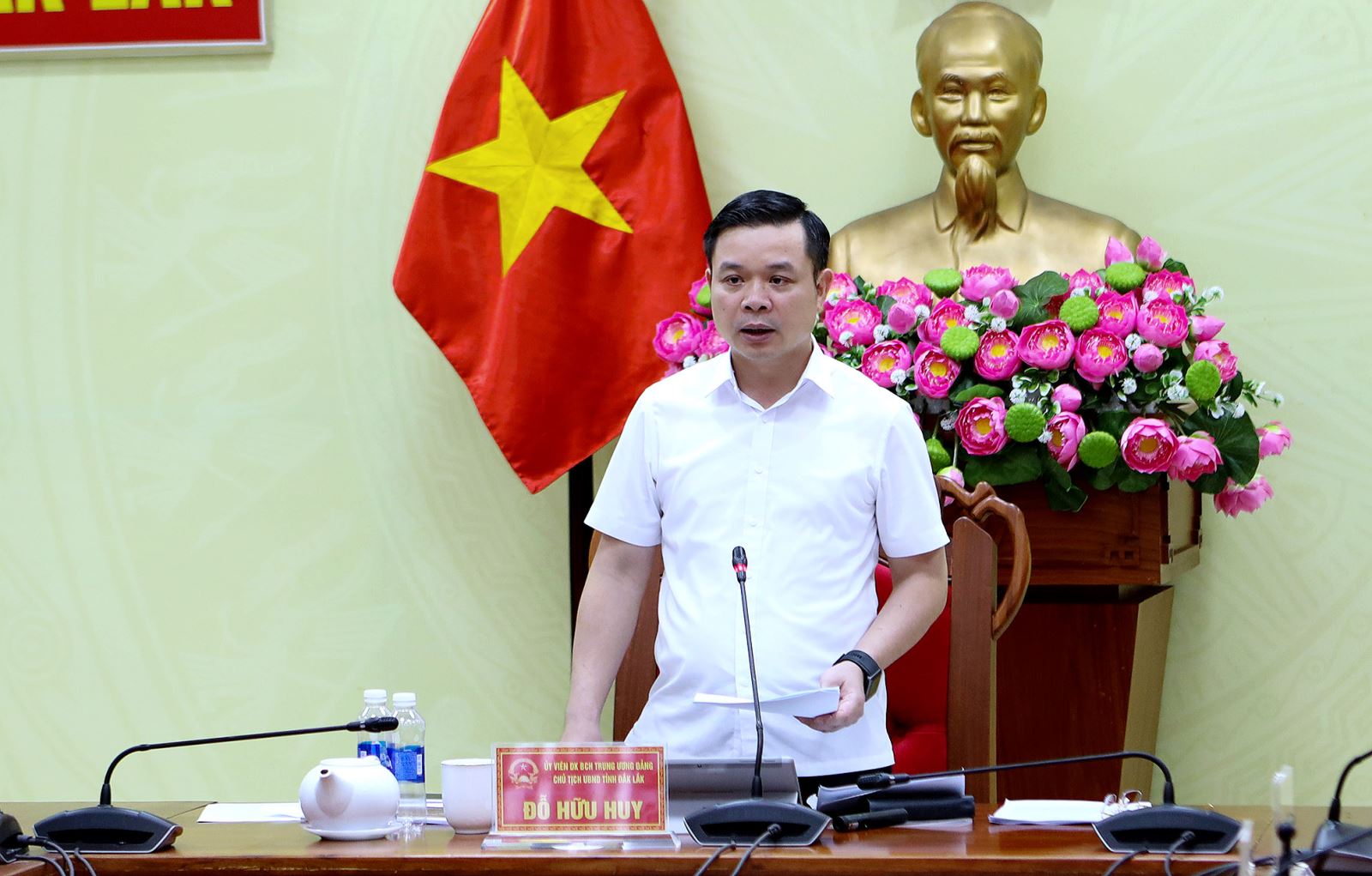
Comrade Đỗ Hữu Huy – Alternate Member of the Party Central Committee, Deputy Secretary of the Provincial Party Committee, and Chairman of the Provincial People’s Committee – delivered the closing remarks at the Conference.
Provincial leaders requested consulting units and relevant agencies to fully incorporate feedback, further refine the draft, clarify the province’s role and position within the new regional context, and develop specific development scenarios with clearly quantified targets, aligned resources, and implementation solutions. The completion process must also meet the required timeline for submission to competent authorities.
In the context of provinces accelerating planning adjustments to meet new development demands, the role of strategic consulting firms is becoming increasingly important. With expertise in planning research, market analysis, and investment strategy consulting, SD Link supports government agencies and businesses in shaping development directions, optimizing resources, and implementing practical solutions. Through a comprehensive and in-depth approach, SD Link contributes to enhancing planning quality and supporting localities in achieving sustainable, long-term socio-economic development goals.
Source: Compiled by Thuy Dang