

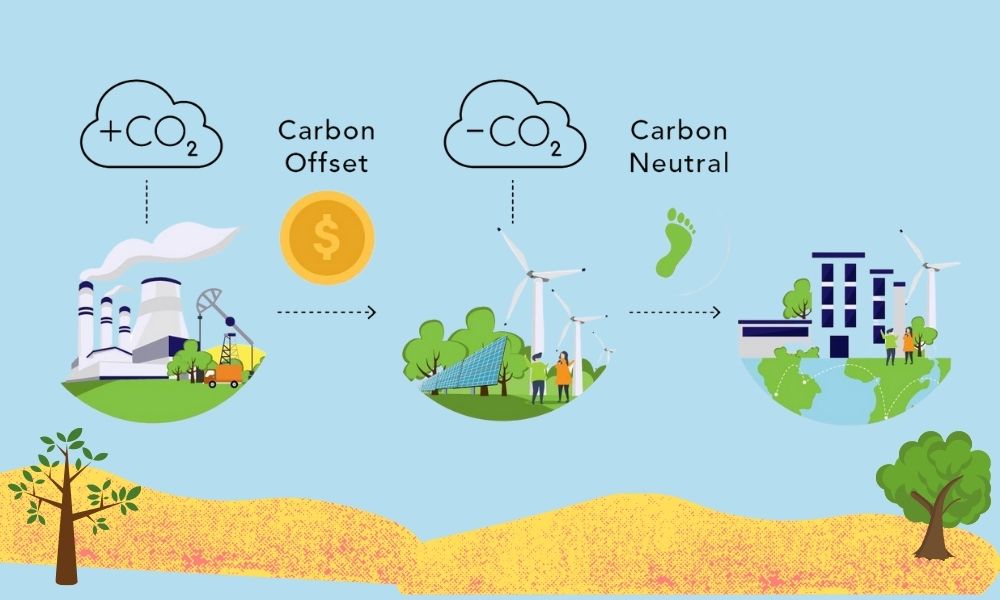
A carbon credit is a certificate that is tradable and represents the right to emit one ton of carbon dioxide (CO) or one ton of carbon dioxide (CO2) equivalent (Environmental Protection Law 2020). Carbon credit exchange and offset mechanisms are the ones to register and implement GHG emission reduction programs and projects and generate carbon credits according to internationally accepted methods or that recognized by Viet Nam.
Carbon credits from programs and projects are exchanged at the carbon markets or compensated for GHG emissions exceeding the allocated quota (Article 3 of Decree No. 06/2022/ND-CP).
The ecological footprint is a term that began to be used in the 1990s by scientists from the University of British Columbia, William E. Rees, and Mathis "Wackernagel". Accordingly, the ecological footprint is a measure of demand for land and water capable of providing the biological productivity necessary to provide food, timber for humans, surface area for infrastructure construction, carbon dioxide absorption, and waste storage and assimilation capacity.

The carbon footprint is understood as "the volume of carbon emission of a product", which refers to both direct and indirect GHG emissions (expressed in a kilogram of CO₂ equivalent) of a product throughout the product cycle, from raw materials through production (or service provision), distribution, consumers' use, and disposal/recycling (Wiedmann & Minx, 2008; Carbon Trust, 2007; BSI, 2008; FAO, 2015).
Source: Ministry of Agriculture and Rural Development, "Guidelines Strategy for Sustainable Agriculture and Rural Development in the period 2021-2030 and Vision to 2050", Ha Noi.
Loi Pham