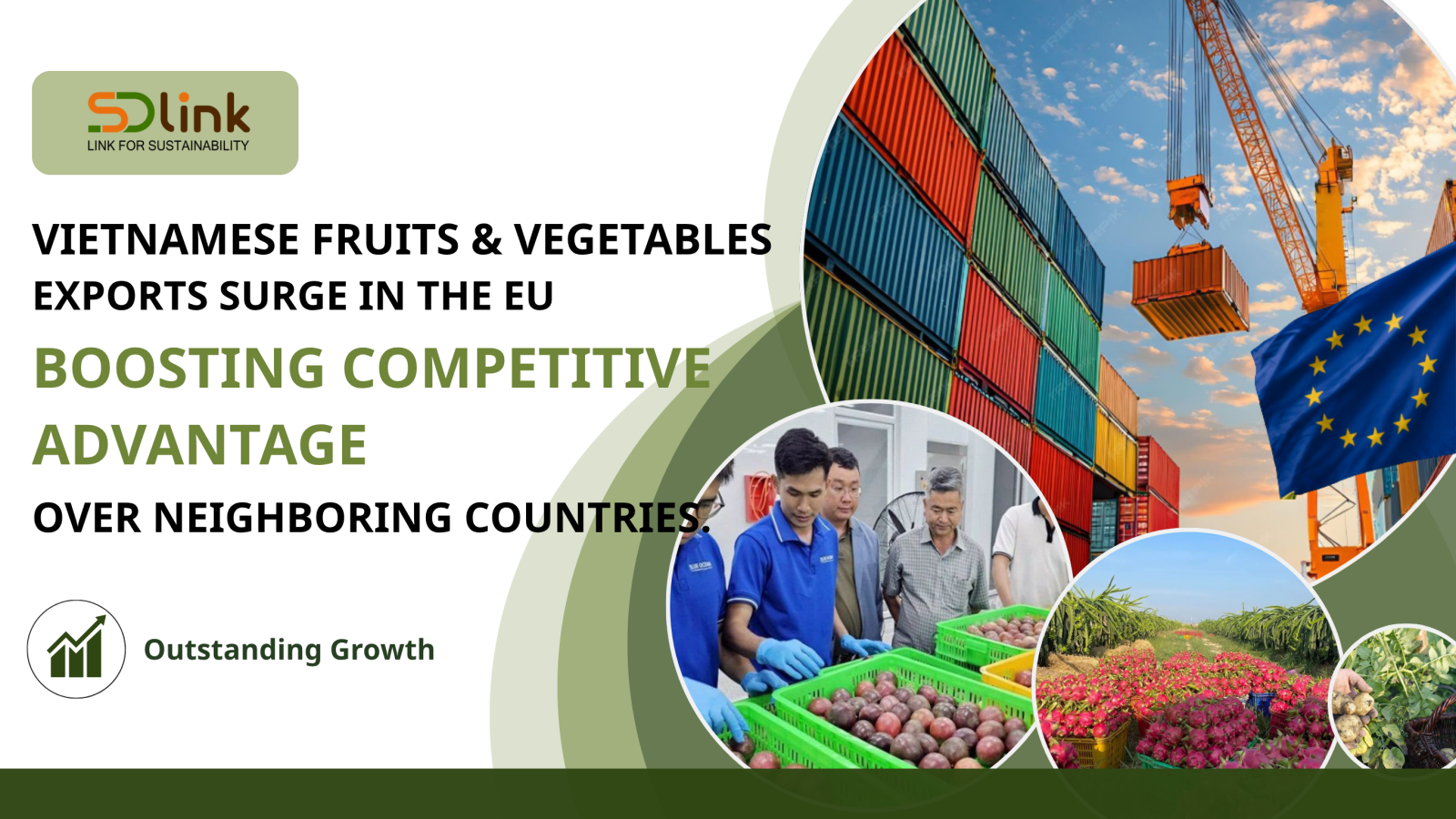
Vietnamese fruit and vegetable exports are showing positive signs in the international market. In July 2026 alone, export turnover hit US$1.12 billion—an all-time high. Specifically, exports to the EU during the first half of the year totaled around US$214.4 million, up 31.8% compared to the same period in 2025.
Advantages of Vietnamese fruits and vegetables in the EU market
A key advantage for Vietnam is its abundant supply of agricultural produce—including dragon fruit, passion fruit, mangoes, bananas, and pineapples—offering great diversity in varieties and seasonality. This enables businesses to develop product lines tailored to EU market demands, such as frozen fruits and vegetables, nutritious nuts (cashews, almonds, and macadamias), and—notably—dried fruits and other high-value-added products.
This strategic direction is particularly significant given the competition Vietnam faces from other regional agricultural suppliers, including China. Rather than competing solely on volume and price, increasing the share of deep-processed goods allows Vietnamese produce to generate greater value, differentiate itself, and better meet the increasingly stringent requirements of the European market.
In practice, processed products now account for nearly two-thirds of the value of Vietnamese fruit and vegetable exports to the EU; this helps extend shelf life, reduce logistics costs, and minimize post-harvest losses. Many processed product categories also showed positive growth; notably, processed passion fruit rose by 37.5%, processed dragon fruit by 50.1%, and potatoes by over 100.7%. In Germany, imports of processed fruits and vegetables from Vietnam surged by 126% in the first five months of 2026, reaching €28.24 million.
From raw material advantages to value-based advantages
Beyond its raw material advantages, Vietnam is gradually transforming production strengths into value-based advantages through processing and quality enhancement. This strategy helps the fruit and vegetable sector reduce post-harvest losses—currently estimated at 30–40%—while improving the efficiency of raw material utilization.
To maintain its competitive edge in the EU, Vietnam’s fruit and vegetable industry must continue to refine growing area codes and packing facility codes, strengthen quality control, and invest in processing technology. In particular, quality control starting at the raw material source will serve as the foundation for fresh, dried, and processed fruit products to consistently meet the increasingly rigorous standards of the international market.
By continuing to leverage strengths in raw material sourcing, product diversification, and deep processing, Vietnamese fruits and vegetables are well-positioned to enhance their standing in the EU relative to neighboring countries—particularly China—and gradually expand their footprint in the global agricultural supply chain. This is the path BABACO ORGANIC pursues by focusing on unlocking the value of Vietnamese agricultural produce from the source to the final product; its dried fruit and processed lines help extend product value, minimize post-harvest losses, and bring Vietnamese specialties closer to international markets.
Source: Government News Portal