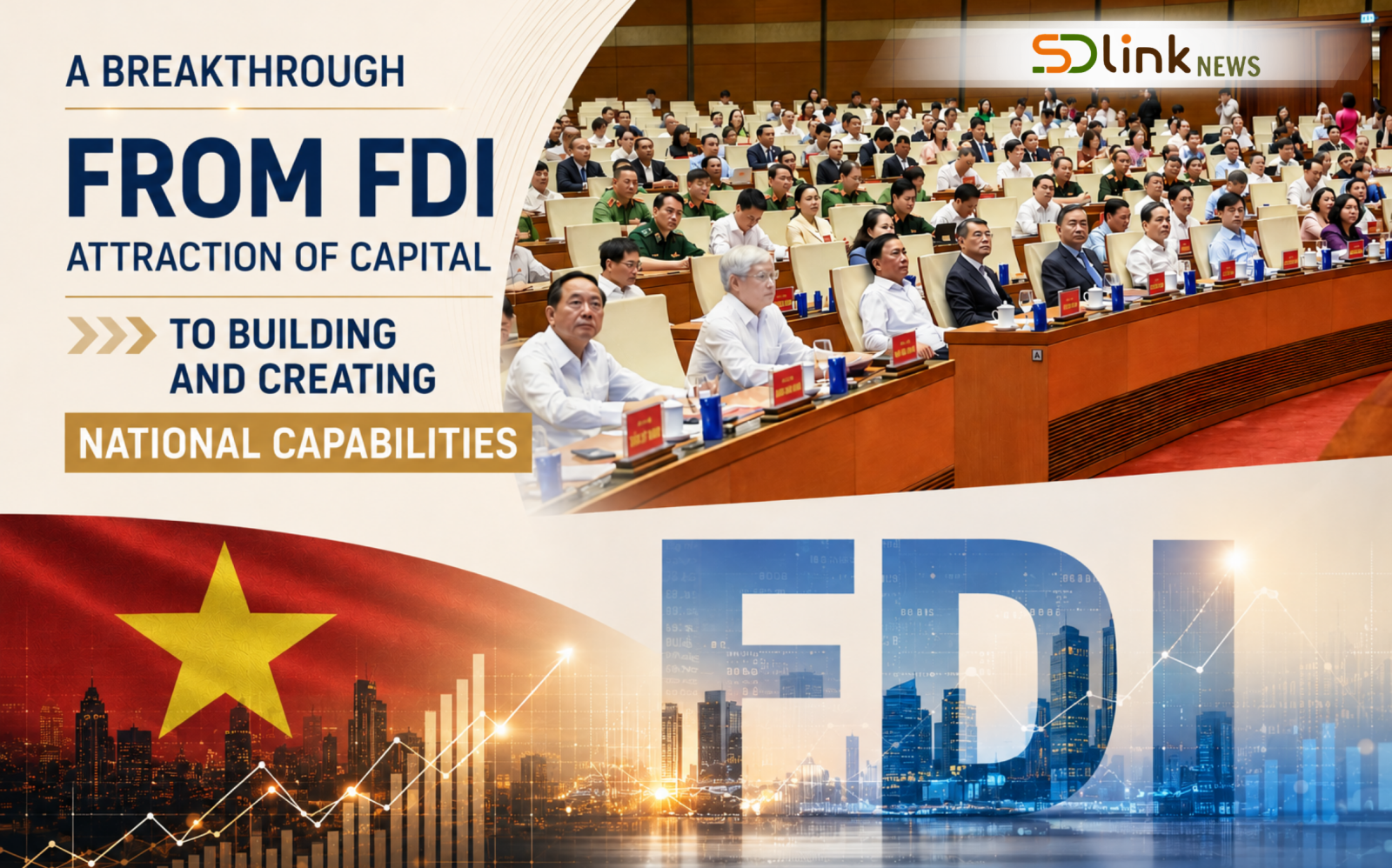
After nearly 40 years of attracting foreign investment, Vietnam has risen to become one of the most attractive destinations for multinational corporations and plays an important role in the global supply chain. The FDI sector not only contributes positively to economic growth, exports, and job creation but also promotes the country's international integration process. However, in the context of global competition increasingly based on technology, innovation, and institutional quality, the FDI development strategy also needs to be elevated to a new level. Resolution No. 10-NQ/TW dated June 8, 2026, marked a significant shift by defining the goal not only as attracting investment capital, but also as effectively utilizing international resources to enhance the domestic strength and competitiveness of the economy.
The core of the Resolution is a change in the way the effectiveness of the FDI sector is evaluated. Previously, success was primarily measured by the number of projects, registered capital size, or export turnover. Now, more important criteria include the level of technology transfer, development of high-quality human resources, promotion of research and development (R&D), innovation, and the ability of Vietnamese businesses to participate more deeply in global value chains. The Resolution also emphasizes a shift from a "attract at all costs" mindset to a "strategic selection" approach. Instead of competing through tax incentives, low labor costs, or cheap land, Vietnam aims to attract high-tech, environmentally friendly projects with high added value and a commitment to technology transfer, human resource training, and strengthening linkages with domestic businesses.
One of the key objectives is to build an industrial ecosystem with strong connections between FDI enterprises and Vietnamese businesses. As domestic businesses gradually improve their production and management capabilities and participate more deeply in the supply chains of multinational corporations, FDI will not only bring investment capital but also create long-term value for the economy. To realize this goal, the Resolution requires continued improvement of institutions towards transparency, stability, and conformity with international practices; increased investment in transportation infrastructure, logistics, clean energy, and digital infrastructure; and a focus on developing high-quality human resources to meet the demands of modern technology industries.
Furthermore, investment promotion efforts need to be reformed to focus on targeted investment, long-term partnerships with investors, and close alignment with the development plans of each locality. Localities will shift from competing through incentives to competing on the quality of the investment environment, governance capacity, and regional linkages.
With the new direction of Resolution 10, FDI is no longer seen simply as a source of capital for growth, but as a driving force helping Vietnam improve its technological capacity, develop domestic enterprises, promote innovation, and strengthen the self-reliance of the economy. This is considered a crucial step, creating a foundation for a high-quality growth model and sustainable development in the new phase. The new orientation of Resolution 10 also opens up many opportunities for capable investment consulting firms to accompany businesses in the process of researching and implementing projects in Vietnam. As a professional investment consulting firm, SDLINK provides comprehensive support solutions for investors from market research and legal consulting to project implementation and connection with domestic partners. In line with the trend of developing high-quality FDI, SDLINK aims to become a bridge between international investors and the Vietnamese market, contributing to creating a transparent, efficient, and sustainable investment environment.
Source: VnEconomy